We measure volatile organic compound emissions from stationary sources and help you choose the right parameter for your permit (IPPC or pollution permit), monitoring programme or process assessment.
Send us an extract from your permit or monitoring programme and a short process description. We will agree on what to measure and how to report the results.
Volatile organic compounds are organic substances that, under process conditions, can be released into the air as vapours or gases.
They can be emitted when using solvents, paints, varnishes, adhesives and cleaning agents, when handling petroleum products, or in other production processes. Measurements help determine emission levels, assess pollution abatement measures and provide data for a specific environmental task.
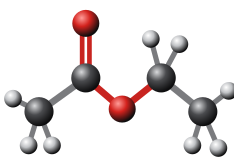
Ethyl acetate C4H8O2
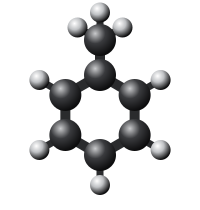
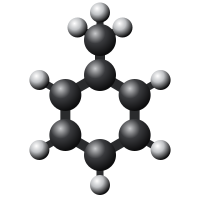
Toluene C7H8
Common solvent VOCs: ethyl acetate – in paints, varnishes and adhesives; toluene – in paints, thinners and printing inks.
Which parameter we can determine
All three parameters are determined at the same site with the same analyser. The choice depends on the requirements of your permit or monitoring programme.
Total organic carbon
We determine the mass concentration of total gaseous organic carbon. This is an overall parameter for organic substances detected by FID, expressed as carbon.
If methane is present in the sample, it also contributes to the total reading.
VOC excluding methane – pollutant code 308
We determine the overall parameter for organic compounds excluding methane. The methane contribution is separated by measuring without a filter and with a non-methane filter.
Most often specified in permits and monitoring programmes.
Methane CH4
We determine the methane concentration separately, using a measuring system with a non-methane filter that removes other hydrocarbons.
Relevant for biogas and combustion plants.
308
What pollutant code 308 means
In Lithuanian environmental documents, code 308 denotes volatile organic compounds excluding methane, not differentiated by composition. It refers to a group of compounds, not to a single substance or a measurement method. That is why, when ordering a measurement, it is important to specify not only the code but also the required units and reporting conditions.
Who these measurements are for
Five situations in which VOC or methane data are needed for a permit, a report or a process decision.
Manufacturers using solvents
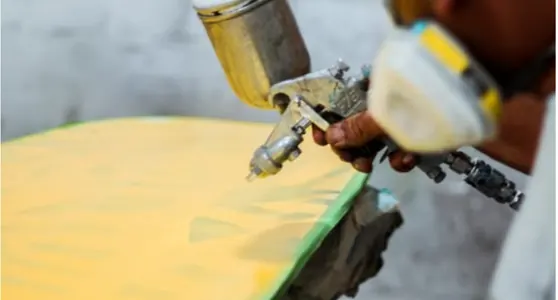
In painting, varnishing, printing, gluing and surface cleaning processes, it is important to know the concentration of organic substances emitted through ventilation systems. Measurements are useful for monitoring, when changing raw materials or when assessing process changes.
Example. A furniture manufacturer switches to a new varnish and wants to compare emissions under similar production conditions, or a VOC installation registration or periodic report is being prepared.
Users and suppliers of air treatment equipment
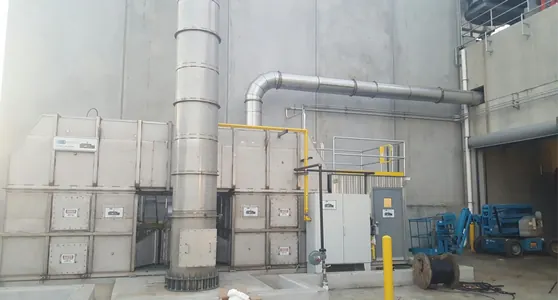
Measurements upstream and downstream of the treatment unit help assess the removal of organic substances. If air flows differ, efficiency should be assessed by comparing pollutant mass flows, not just concentrations. We can measure at 3 points simultaneously.
Example. A company checks the performance of an activated carbon filter or a thermal oxidiser.
Petroleum and chemical companies
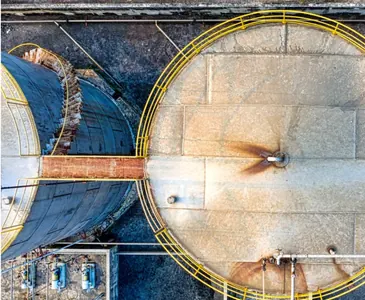
The measurement task may concern emissions of organic substances from gas streams that are collected and routed to a stack. Before starting, we assess the gas composition, concentration and suitability of the measuring system.
Example. The emissions of a vapour recovery system need to be assessed.
Biogas and combustion plant operators
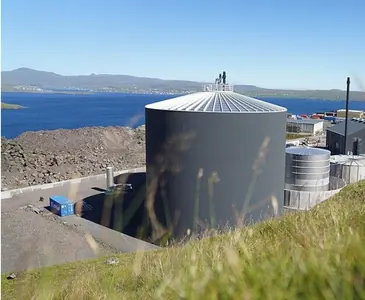
When exhaust gases may contain methane and other organic substances, separating them helps characterise emissions more accurately. We agree in advance whether a specific gas stream is suitable for measurement.
Example. Unburnt methane emissions and the non-methane parameter need to be assessed separately.
Environmental specialists and consultants
We help align the measurement task with the parameter specified in a permit or monitoring programme. This is relevant when planning measurements, preparing source assessment data or examining the effect of process changes on emissions.
How we carry out measurements
We use a portable ErsaTec SmartFID analyser with a flame ionisation detector (FID). Organic carbon in the gas fed to the analyser produces a measurable signal.
To determine methane, we use a non-methane filter that removes other hydrocarbons before the FID and lets methane through. Data from measurements without and with the filter make it possible to assess methane and the non-methane total separately. Calculations use comparable results converted to the same basis.
We tailor the scope and duration of measurements to the task, so the first step is always a conversation about what the results will be used for.
1
We agree on the task
We find out which parameter is needed, what the results will be used for and which requirements apply to the source. We review the information you provide from your permit or monitoring programme.
2
We plan the measurements
We agree on the emission sources, process operating mode and measurement timing. We check sampling ports, access and gas flow conditions so that the results represent the emission being measured.
3
We measure on site
We prepare and check the measuring system, measure the agreed parameters and record relevant process conditions. A separation system is used to assess methane and the non-methane parameter.
4
We deliver the results
The report states the parameter, result, units, method and the conditions needed to interpret the result. Where required – measurement uncertainty and agreed conversions. Assessment of compliance with a limit value is agreed separately.
What to know about the results
Four things worth discussing before the measurement, so that the result can be used directly for a permit or report.
mg C/m³
Concentration shows the amount of the parameter per unit volume of gas. The notation mg C/m³ means the result is expressed as carbon mass. It is not automatically the sum of the masses of all compounds.
CH4 or C
A methane result can be expressed as CH4 or as methane carbon. These expressions differ, so the report clearly states the basis of the result.
g/s, kg/h
If emissions in g/s or kg/h are needed, suitable gas volume flow data are also required. Concentration and flow must be expressed under the same gas conditions.
Limit value
A comparison is only possible once the parameter, units, dry or wet gas basis, temperature, pressure and, where applicable, oxygen correction have been agreed.
Get a quote tailored to your task
Not sure whether you need total organic carbon, VOC excluding methane or methane only? We will help you find out.
Site location
Short process description
Number of emission sources
Extract from your permit or monitoring programme, if available
Price and lead time are agreed based on the scope of measurements and site conditions.
Is the total FID reading the same as pollutant 308?
Not always. The total reading also includes the methane contribution, if methane is present. Code 308 means VOC excluding methane. To determine this parameter, the methane contribution has to be separated, and the way the result is reported must be agreed against the specific requirement.
Can you measure methane only?
Yes. We use a non-methane filter that removes other hydrocarbons, so the methane contribution can be determined by FID. Before measuring, we assess the specific gas conditions and the appropriate measuring range.
Will the test show benzene or another compound separately?
This service determines total organic carbon and methane. Determining concentrations of individual compounds, such as benzene or toluene, requires a different analytical task – although if the source contains only one specific compound, the result will reflect it. If you need a list of compounds, please mention it in your enquiry.
Can mg C/m³ simply be converted to mg VOC/m³?
No. mg C/m³ refers to carbon mass, while the mass of a specific compound depends on its composition. A single universal conversion factor cannot be applied automatically to a mixture of unknown composition.
Will I get the emission rate in g/s from the concentration?
This also requires the gas volume flow. When ordering, please state whether you need only the concentration or also the mass flow. We will agree separately on any additional data and measurements needed.
Can I bring a sample myself?
The measurements described on this page are carried out on site, with the gas sample fed directly into the measuring system. Please do not take or transport a gas sample yourself without agreeing it with the laboratory – storage and condensation can change its composition.
How many measurements are needed and how long will it take?
It depends on the number of sources, process stability, the required measurement duration and the applicable documents. We agree on the scope and timing after assessing your task.
How do these measurements differ from indoor air or odour testing?
This page covers the analysis of exhaust gases from stationary sources. The result does not directly indicate odour concentration, workplace exposure or indoor air quality. Such questions require a separate testing task.
Are these measurements accredited?
Yes. Our laboratory is accredited to measure total gaseous organic carbon, VOC excluding methane (pollutant code 308) and methane.
FID – flame ionisation detector.
All environmental services in one place
VOC and methane measurements are carried out by AV Consulting – an environmental consultancy and accredited laboratory that has been helping businesses operate responsibly and lawfully since 2004.

 Accredited laboratory




 Site location